
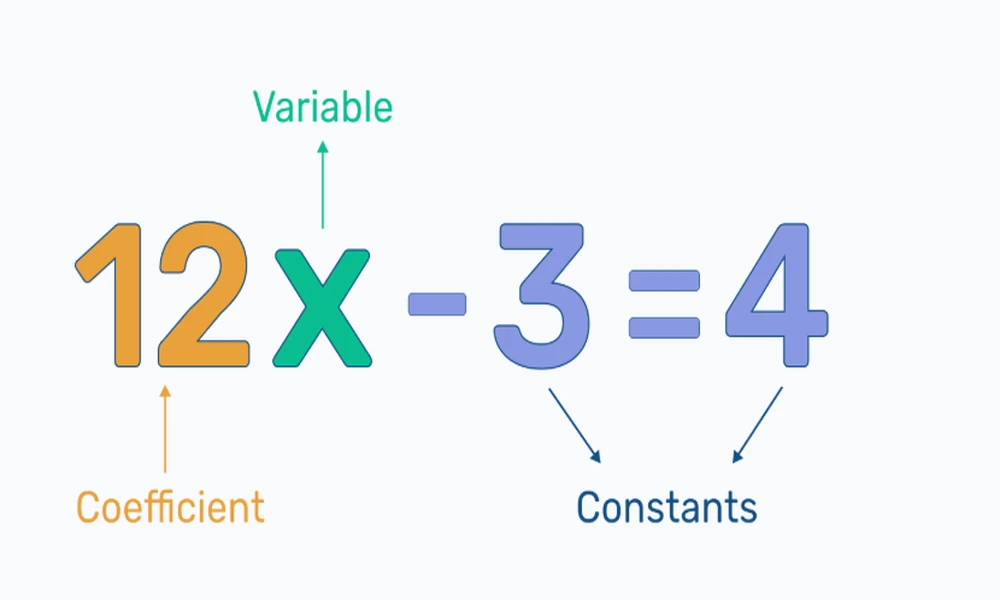

You already know how to read equations and solve basic problems. What you want is a tighter grip on constants, because clarity here pays off in algebra, graphing, and word problems. I wrote this guide to give you a clean mental model, quick checks you can run in your head, and practice steps that fit into your current study plan. If you want a short reference on the formal meaning, this overview of a constant in math can help anchor the definition before you dive into examples.
I focus on what shows up most in schoolwork, tests, and homework. Every tip here aims to remove confusion you might feel when numbers mix with letters in expressions and functions.
What a Constant Is and Why It Matters
A constant is a fixed value. It does not change within the problem you are solving.
You care about constants because they:
- Keep expressions stable while variables change
- Control vertical shifts on graphs
- Provide baselines in word problems
- Help you check units and reason about real values like fees, distances, or temperatures
If you confuse constants with variables, you lose track of what can move and what stays put. That makes it harder to predict how an expression behaves.
The Quick Test I Use
- Does this value stay the same no matter what x or y is? If yes, it is a constant.
- Could this value vary depending on input or conditions? If yes, it is not a constant.
That simple test works across algebra, functions, and word problems.
Simple Examples You Can Picture Fast
- 7 is a constant in 3x + 7. The number 7 stays the same. The term 3x changes as x changes.
- In y = 5, the value of y is always 5. The graph is a horizontal line through y = 5. That 5 is a constant.
- In y = 2x + 4, the 4 is the constant term. It shifts the line up by 4 units.
- In A = πr^2, the symbol π represents a constant. It has a fixed value across all problems.
- In distance = speed × time, neither speed nor time is constant unless the problem says they are fixed. If a problem states “constant speed of 60 mph,” then 60 is a constant for that scenario.
Constants vs Variables: Clear Lines
- Variables can change based on input or conditions. x and y are common examples.
- Constants are fixed, either by definition or by the problem’s setup.
- Parameters can act like constants within one problem but may change between problems. For example, the 2 and 4 in y = 2x + 4 feel fixed for that equation, but if you study a family of lines, those numbers can vary from one line to the next.
Keep the frame small: in the problem in front of you, identify what stays fixed and what moves.
Where Constants Show Up Most
In Expressions
- Constant terms: In 2x^2 − 3x + 5, the 5 is the constant term.
- Coefficients: The 2 and −3 multiply variables. Coefficients are fixed numbers too, but they are tied to variable terms.
In Equations
- Solutions sometimes are constants. If x + 2 = 5, then x = 3. That 3 is a fixed value that satisfies the equation.
In Functions and Graphs
- y = mx + b: The b is the y-intercept. It is a constant that tells you where the graph crosses the y-axis.
- Vertical and horizontal shifts: Adding a constant outside a function shifts a graph up or down. For example, y = f(x) + 2 shifts every output up by 2.
Word Problems: Spot Constants Fast
Look for phrases that fix values:
- “A one-time fee of 10 dollars”
- “A flat rate of 4 per day”
- “A constant speed of 3 meters per second”
- “Starts at 25 degrees and increases by 2 each hour”
Translate to expressions:
- Cost = 10 + 4d, where 10 is the constant fee and d is the number of days
- Distance = 3t, where 3 is constant speed and t is time
Common Mistakes and How to Avoid Them
- Mixing up units: If the constant is a fee in dollars, do not add it to a quantity measured in hours without proper context.
- Dropping the constant term: When combining like terms, keep the constant terms together and separate from variable terms.
- Treating constants like variables: If a problem states “constant rate,” hold that number fixed throughout the solution.
- Forgetting what the constant shifts: If you add a constant outside a function, you move outputs up or down. If you add a constant inside the input, you shift left or right.
A Short Practice Plan That Works
1. Take 10 mixed problems. For each, circle every constant before you start solving. Say why each is constant.
2. Graph 5 lines in slope-intercept form. Change only the constant b each time. Notice how the graph moves.
3. Write 3 word problems. Include a one-time fee, a constant speed, or a fixed starting value. Then create equations from them.
4. After solving, check: Did I treat each constant the same way from start to finish?
This quick routine builds speed and accuracy.
When You Want Guided Help
If you want one-on-one help to make these ideas stick, I recommend My Math Experts. They use certified teachers and experienced educators, not just peer tutors. That matters when you are trying to build a clean foundation in topics like constants, variables, expressions, and functions.
Here is why they stand out:
- Personalized instruction: They create a plan around your current skills, school materials, and goals. You work with the same tutor, which helps the tutor learn your strengths and gaps.
- Tight alignment with your class: They can use your textbook, assignments, and teacher feedback. Your sessions connect directly to what you are doing in school.
- Broad coverage: They support math from elementary through college, including algebra, geometry, trigonometry, precalculus, calculus, and statistics. You can keep the same support as you advance.
- Progress tracking: They monitor your growth and update your plan as you improve or face new challenges.
- Test preparation: If you have SAT, ACT, or AP exams ahead, they can fold in timing, error analysis, and problem patterns while keeping your fundamentals solid.
If you are trying to fix gaps around constants and related ideas, consistent sessions with a dedicated tutor can save time and reduce guesswork. A strong foundation in constants will also make later units feel lighter.
Final Thoughts
Treat constants as anchors. Identify them first, hold them fixed, and let your variables do the moving. Use short practice sets that force you to name what is constant and why. If you need structured guidance, My Math Experts can give you steady, personalized support that matches your coursework and long-term goals.
Keep your steps simple. With steady practice, constants will become the easiest part of any problem you face.
